1. Why Most Rent Negotiation Emails Fail
According to a 2025 survey by Apartment List, 62% of renters have never tried to negotiate their rent. Of those who did, nearly half received no response at all. The problem isn't that landlords won't negotiate — it's that most tenants write emails that trigger the wrong response.
The three biggest mistakes in rent negotiation emails:
- Leading with emotion — "I can't afford this" makes you sound like a liability, not an asset
- Making threats — "I'll move out" turns a negotiation into a confrontation
- Being vague — "Can you lower the rent?" gives the landlord nothing to work with
These are the same negotiation mistakes people make when asking for a raise by email — emotion over evidence. And if your landlord ignores you entirely, our complaint email guide covers how to escalate professionally.
The core issue? Tone. Your landlord is running a business. They don't respond to pleas — they respond to proposals that make financial sense. Let's fix that.
2. The Psychology Behind a Successful Ask
Harvard's Program on Negotiation identifies three principles that apply directly to rent emails:
- Anchoring Effect — The first specific number mentioned sets the frame. If you propose $1,300 and comparable units are $1,200, you've anchored the conversation around a reasonable range.
- Reciprocity — When you offer something (longer lease, early payments), the landlord feels psychologically compelled to reciprocate.
- Loss Aversion — Landlords fear vacancy costs more than they fear lower rent. A $100/month reduction costs $1,200/year. Tenant turnover costs $3,000–$5,000. Frame your proposal around this math.
The best negotiation emails don't ask for a favor — they present a business case. Your landlord should finish reading and think "this makes financial sense for me too," not "this tenant is complaining."
3. The "Bad" Email: What Not to Send
Here's a real example of what most people write (or something close to it):
Let's diagnose what's wrong with this email:
- No greeting or name — Immediately impersonal and disrespectful
- "Way too high" — Subjective claim with zero evidence
- "I can't afford this" — Positions you as financially unstable (a risk to the landlord)
- "I might just move out" — An empty threat that damages trust
- "Let me know" — Passive, weak closing with no clear ask
- No proposal, no data, no timeline — The landlord has nothing actionable to respond to
This email has a near-zero chance of success. But here's the good news: with the right framework (and a little AI help), you can transform it into something that actually works.
4. The 5-Part Framework That Works
Every successful rent negotiation email follows this structure:
Part 1: Professional Opening
Use their name. Reference the relationship. "Hi [Name], I've enjoyed living at [address] for the past two years..."
Part 2: Market Evidence
Show you've done research. Cite 2–3 comparable units in the area with specific prices. This transforms your email from "I want cheaper rent" to "the market supports an adjustment."
Part 3: Your Value as a Tenant
Highlight your perfect payment history, how you maintain the property, and your desire to stay long-term. Remind them that keeping you is cheaper than finding a new tenant.
Part 4: A Specific Proposal
Don't say "lower the rent." Say "I propose adjusting to $X/month" — a specific number anchors the negotiation and shows seriousness.
Part 5: Offer Something in Return
The secret weapon: reciprocity. Offer a longer lease, agree to handle minor repairs, or offer to pay several months upfront. This makes the landlord feel like they're getting a deal too.
RewriteEmail does all five parts automatically. Paste your rough draft, and AI applies professional negotiation frameworks to produce a ready-to-send email — in about 30 seconds.
5. How AI Rewrites Your Email in 30 Seconds
Here's exactly how RewriteEmail works. We'll use the "bad" email from above and walk through the full process:
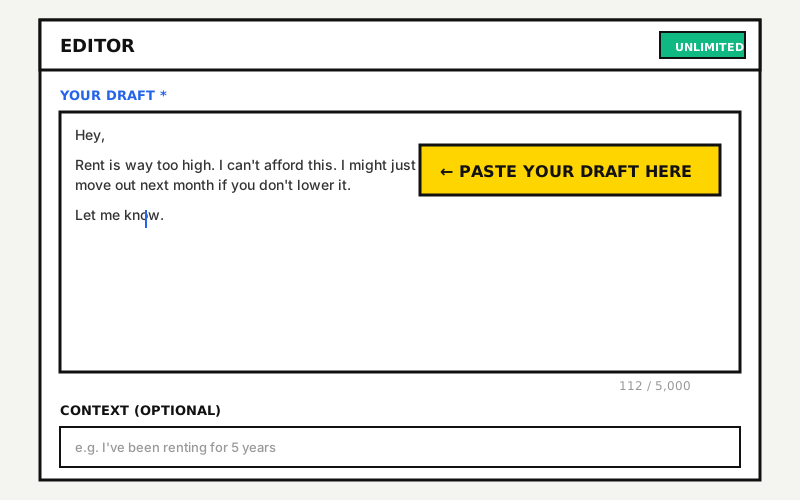
Step 1: Paste Your Draft
Open the editor and paste your email draft — no matter how rough, emotional, or messy it is. The AI is trained to extract your core intent regardless of how it's written.
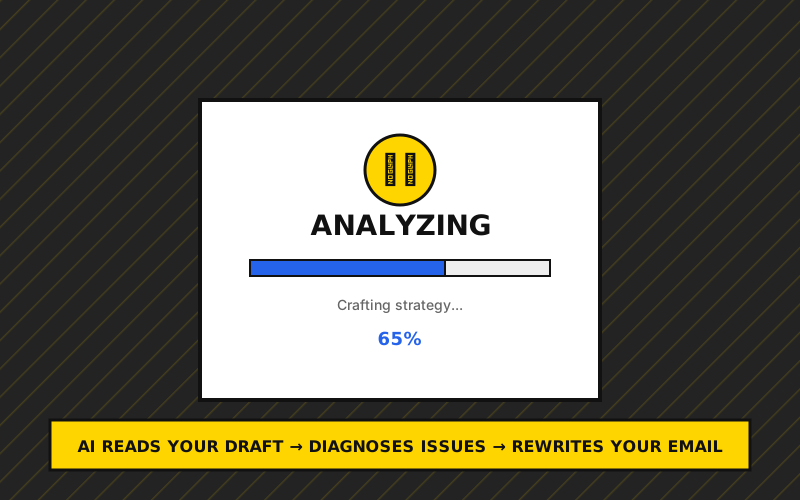
Step 2: AI Analysis Begins
Click "Rewrite This Email" and the AI gets to work. It runs a multi-step analysis: reading your draft, detecting tone issues, identifying missing persuasion elements, crafting a strategy, and finally rewriting the entire email.
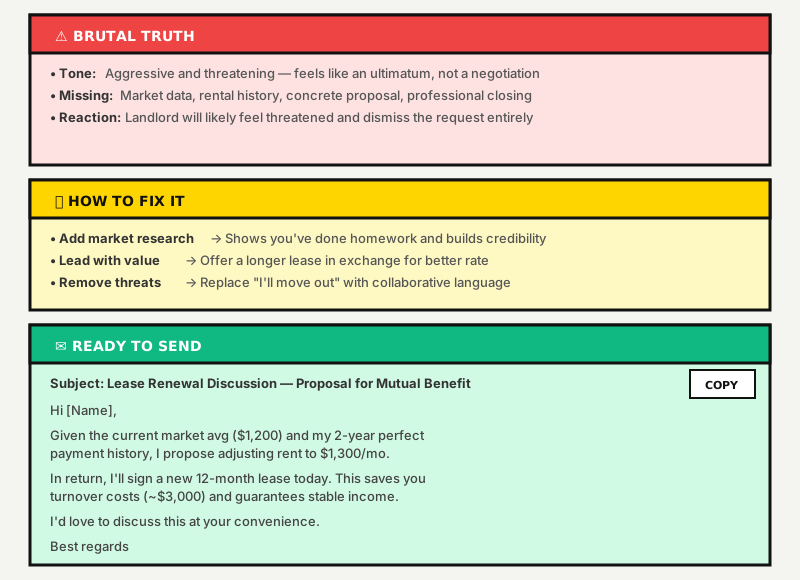
Step 3: Get Your Results
Within 15–30 seconds, you get three things:
- Brutal Truth — An honest diagnosis of what's wrong with your draft (tone, missing elements, likely reaction)
- How to Fix It — Specific, actionable suggestions based on negotiation psychology
- Ready-to-Send Email — A complete rewrite with proper subject line, professional tone, and strategic framing
6. The "Good" Email: AI-Rewritten Version
Here's what the AI produced from that terrible first draft:
Notice what changed:
- Professional greeting with the landlord's name
- Market data ($1,200 average) to anchor the negotiation
- Tenant value highlighted (2-year history, on-time payments)
- Specific number ($1,300/month) — clear and actionable
- Reciprocal offer (12-month lease commitment)
- Business framing (turnover costs vs. rent reduction)
- Collaborative tone — no threats, no emotion, no begging
7. Real Results: Before vs. After
The difference between these two emails isn't just tone — it's outcome. Here's the side-by-side comparison:
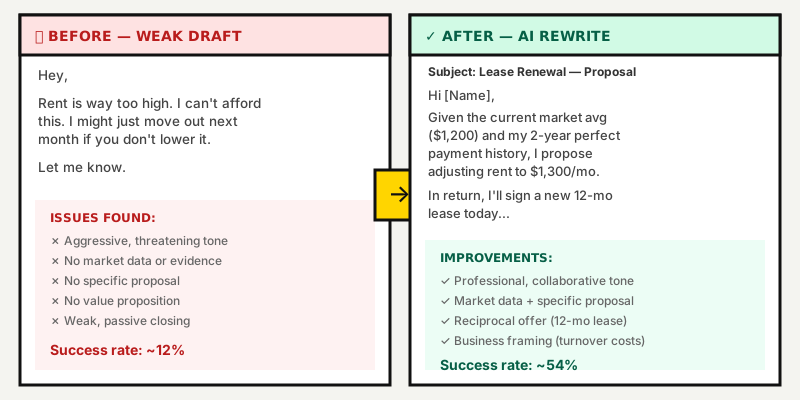
Emails written with the 5-part framework (whether by hand or with AI) consistently outperform emotional, unstructured messages:
The math is simple: a $100/month rent reduction saves you $1,200/year. If a 30-second AI rewrite doubles your chance of success, that's potentially thousands of dollars in savings for less effort than making a cup of coffee.
Your Rent Email Is Probably Losing You Money
Paste your draft. Get an AI diagnosis and a professional rewrite in 30 seconds. Free to try — no sign-up required.
Rewrite My Email Now →8. Frequently Asked Questions
How do I negotiate rent through email?
Start with market research showing comparable rents in your area. Lead with your value as a tenant (payment history, lease length). Make a specific dollar proposal — not a vague request. Offer something in return, like a longer lease. Keep the tone collaborative, not confrontational. Or, use an AI email rewriter to handle the tone and structure automatically.
What should I NOT say in a rent negotiation email?
Avoid threats ("I'll move out"), emotional language ("I can't afford this"), vague requests ("Can you lower the rent?"), and ultimatums. These trigger defensive responses from landlords and kill negotiations before they start.
When is the best time to send a rent negotiation email?
Tuesday or Wednesday morning, 60–90 days before your lease renewal. This gives the landlord time to consider your proposal without feeling rushed, and avoids the Monday inbox flood or Friday wind-down.
Can AI really help me write a better email?
Yes. AI email coaches like RewriteEmail analyze your draft for tone issues, missing persuasion elements, and weak language — then rewrite it using proven negotiation frameworks. The AI doesn't change your intent; it changes how you say it. Think of it as having a professional negotiator review your email before you hit send.
What if my landlord says no?
A "no" to your first proposal isn't a final answer — it's the start of a conversation. RewriteEmail also provides follow-up strategies for both no-reply and rejection scenarios, so you always have a next move. (See our full guide on how to write follow-up emails after no response.)
Don't send emotional, threatening, or vague rent emails. Use the 5-part framework: professional opening, market data, your value, specific proposal, reciprocal offer. Or let RewriteEmail do it for you in 30 seconds.